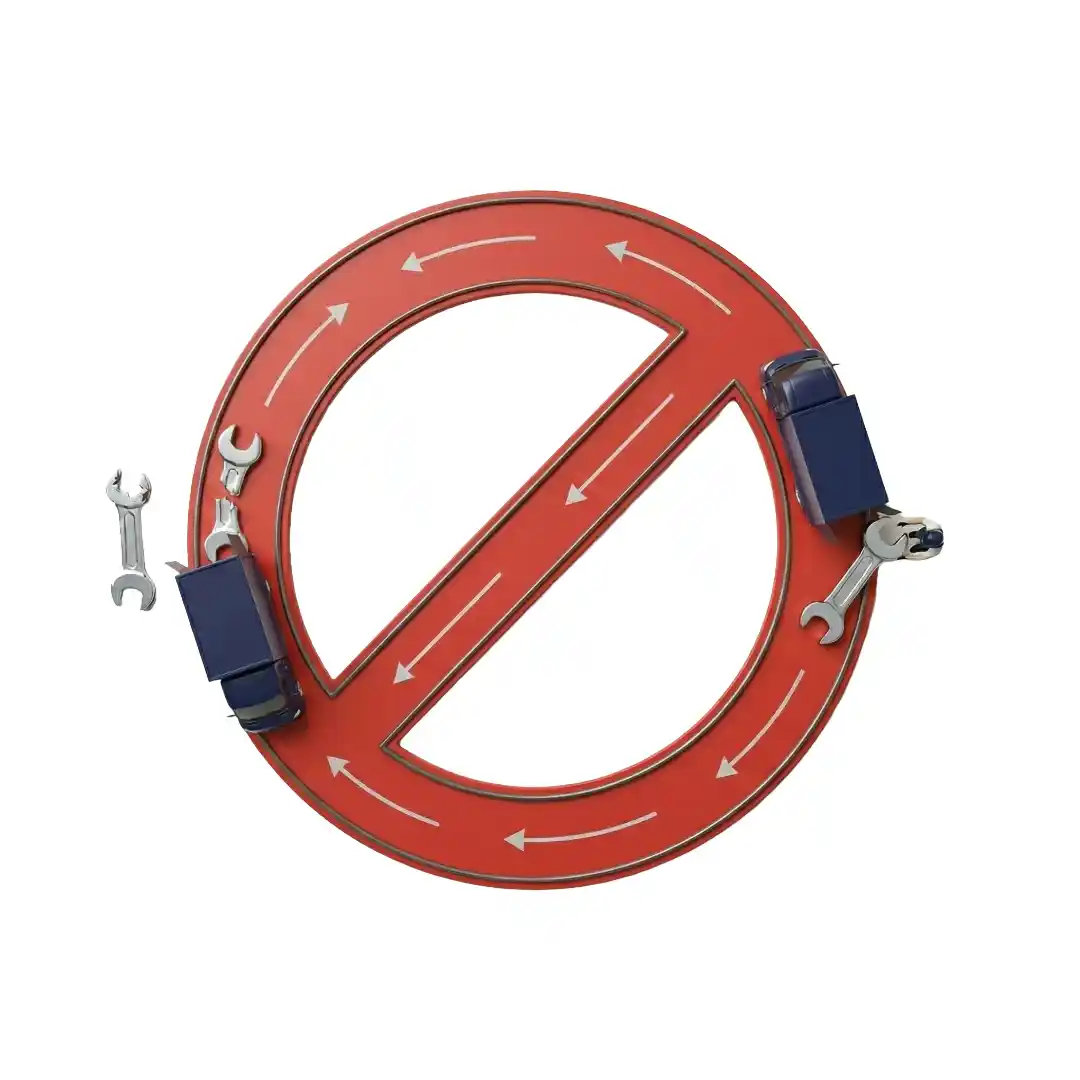
The current enthusiasm for Product-as-a-Service (PaaS) within the industrial sector masks a fundamental strategic misalignment. Many premium manufacturers are confusing efficient replacement logistics with a genuine circular economy. While the transition from hardware sales to subscription models is marketed as ecological progress, the operational reality on the ground reveals a structural deficit. When leading brands shift their focus from maximum durability to minimal exchange intervals, they jeopardize the very foundation of their technical reputation.
In a profitable PaaS ecosystem, longevity replaces the logistics of failure as the primary profit driver.
How the Replacement Trap Delutes Circularity
Industrial practice has fallen into a replacement trap. Instead of engineering tools capable of withstanding physical stress over the long term, organizations have merely perfected the management of failure. Current performance indicators prioritize the speed of hardware replacement over the absence of downtime. This logic fundamentally ignores the core of resource efficiency. A tool that never fails outperforms even the most optimized return logistics in terms of Total Cost of Ownership (TCO).
Furthermore, the environmental deficit undermines ESG reporting. Transporting heavy machinery across continents for minor repairs generates carbon emissions that frequently neutralize the theoretical gains of a circular economy. Parallel to this, a psychological loss of value occurs. Skilled workers lose their connection to their equipment when tools constantly break. The gear becomes a disposable rental commodity, causing the brand to lose its status as a dedicated partner to the craft.
Why Longevity is a Garant for Profits
Engineers frequently justify the use of plastic components as protective “sacrificial” zones for the motor. In a rigorous circular economy, this argument often proves to be a pretext for cost-optimized production at the expense of substance. True circularity demands a return to industrial tolerances that were previously dismissed as over-dimensioned.
In the current market stage, PaaS margins erode by the frequency of service interventions. The most durable tool should theoretically be the most profitable, yet this economic lever remains largely underutilized. Every interaction by factory customer service immediately diminishes the manufacturer’s margin. High-grade alloys and mechanical precision are no longer cost factors in this context. They are necessary investments in the long-term profitability of the subscription. Those who cut costs here will pay multiple times over through increased logistics and personnel expenses in service centers.
Why “Over” Engineering is Sustainable
To secure PaaS models sustainably and profitably, leadership must pivot from pure logistics management back to disciplined user-centric engineering.
- Products require a modular architecture that enables the replacement of wear parts on-site within seconds. A machine that needs a factory visit for minor maintenance represents a massive design failure rather than a service feature.
- Internally, the Mean Time Between Failures (MTBF) must be established as the primary metric for incentivizing product development. Reliability then becomes the strategic imperative.
- Material quality serves as the brand promise. Physical weight and tactile integrity provide evidence of the tool’s role as a valuable material repository. A Digital Product Passport must not become a mere ledger of failures. Organizations that simply manage resources instead of preserving them through excellent engineering will fail the industrial mandate of the coming decade.
FAQ
Replacement logistics focuses solely on the rapid exchange of defective hardware. A true circular economy begins at the design stage and prioritizes maximum uptime. A circular model is strategically successful only when the tool avoids entering the service loop entirely.
MTBF is the decisive metric for the economic viability of a PaaS strategy. High reliability reduces the need for backup inventory and drastically lowers global transport costs. In a mature model, technical reliability becomes the primary driver of organizational yield.
Frequent transport of heavy industrial equipment over long distances can completely offset the environmental benefits of resource conservation. A credible sustainability model must facilitate on-site repairs through modular design to eliminate unnecessary transport emissions and logistical waste.
Modularity allows end-users to replace wear parts immediately on-site. This prevents costly downtime on projects and permanently reduces the burden on the manufacturer’s central workshops. Any product that must be shipped for routine maintenance is a structural failure from a strategic perspective.
Tactile quality and material grade serve as physical proof of brand excellence. A Digital Product Passport should not be a chronicle of failure documenting short-cycle exchanges. Those who merely manage resources instead of preserving them through superior engineering for decades will lose their status as technological market leaders.
Resources:
Prologis: Bold Predictions for 2026: Supply Chain Trends to Watch
Persistence Market Research: Equipment-as-a-Service (EaaS) Market Size, Share, and Growth Forecast, 2026 – 2033 (March 2026)
European Environment Agency (EEA): Assessing the Climate Mitigation Potential of Circular Economy, European Topic Centre on Circular Economy (February 2026)
Leave a Reply